I went to church last Sunday for the first time in fifty years. I was tempted by the Church of Beethoven, in Albuquerque, New Mexico (Slogan: “Church minus the religion!”).
Founded in 2007 by cellist Felix Wurman, the idea of the church is to “celebrate the ecstasy of music” in a church where “music is the principle element, not an afterthought.” “Wurman recruited musicians from the New Mexico Symphony Orchestra, and they began playing Sunday concerts in an abandoned gas station off old Route 66. Wurman called the Sunday concerts the Church of Beethoven. Wurman said he founded the church to help people "find spirituality through culture. “ (Wikipedia). Wurman died of cancer in 2009.
 The Sunday “services” are currently held in an abandoned warehouse and loading dock in downtown Albuquerque (1715 5th St., NW) and start at 10:30 am, for one hour. I was fortunate to catch a Schubert piece, “Rondo in A major for solo violin and strings.” A standard string quartet was supplemented with a bass (which simply doubled the cello part) plus of course the soloist, in this case, David Felberg, violinist with the New Mexico Symphony and also co-director of the Church since Wurman’s death. It was a lovely, rousing piece with lots of delightful folk elements, which Felberg played entirely from memory. The rest of crew kept a close eye on him and did manage to keep up.
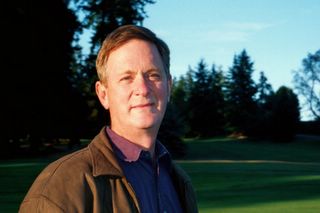
(Felix Wurman)
 There were perhaps 150 people there, mostly aged over 40 (perhaps because there is a $15 admission charge). You can get one cup of espresso coffee free and attendees bring home made cookies and other nibbles. It is a very warm, friendly crowd. The other side of the warehouse (which I snuck into) is divided into stalls which are apparently rented out as artist studios and there is a small art gallery as well. The entrance to the warehouse has quirky artistic sculptures around it which warns you that you are entering a light, playful zone.
 After the Schubert, poet Richard Vargas read a new composition, which I think was titled “Shenandoah.” Vargas is at the forefront of contemporary Latino poetry and has published several books of verse. See http://www.mainstreetrag.com/R_Vargas.html for a sample of his work. I thought the poem he read, about immigrants from the south, was musical, rhythmic, and extremely heartfelt, but it did not achieve much separation of tone and mood, so the overall effect was something like a jeremiad. Still, the content was edgy and it was courageous to present it to an all-white, middle class, middle-aged audience. It was quite well received by the crowd.
 After the poetry reading there were two minutes of silence. Then the duo of Stephanie Bettman (voice and fiddle) and Luke Halpin (voice, guitar and mandolin) played a selection of traditional tunes and their own compositions. The duo bills itself as a “bluegrass duo” and while their instruments and style of playing have a bluegrassy sound, their compositions do not. Instead I would characterize the performance as sappy, sentimental, brain-dead folk music, which was a real disappointment because it is obvious that these players have considerable talent. (Check http://www.stephaniebettman.com/). However, maybe they knew their audience much better than I, for their performance was warmly appreciated.
I forgot to mention that there was also a video artist there, someone who was not on the program, who projected some very creative video shorts onto a sheet while the crowd was gathering before the start of the morning’s performance. He was introduced and said a few words about how the video images were triggered or paced in some way to the sounds of the crowd noises. Too bad he was not better documented for the audience, and remains anonymous.
Overall, this was a wonderful way to spend a Sunday morning. The Church of Beethoven is unique as far as I know, but I don’t see why it should be. If every city had a similar organization, the country would be a better place. (See http://www.churchofbeethoven.org/).


 Posts
Posts