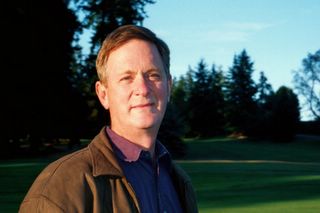
PDX is the airport code for Portland, Oregon, which hosted its 31st Jazz Festival Feb. 15-24, 2008. I attended the opening weekend only, hating to leave all that good music behind when I returned. This was my second PDX Jazz festival, and it has been satisfying both times, even though I can only attend for one long weekend, not the whole ten day run. The festival has some great venues at the city’s performing arts center and numerous clubs around town, although I have now learned to avoid all shows that occur in hotel ballrooms. They are just not set up for it. Sure, they can cram a thousand chairs into a space, but the air quality is so bad, the oxygen content so low, the temperature so high, that one struggles to maintain consciousness. This has been a consistent experience at both the Hilton and the Marriott, so be advised: bring your own oxygen if it is in a hotel. This is not the case for the Schnitzer, Newmarket, and Winningstad concert halls, which are marvelous acoustically, aesthetically, and environmentally.

Portland is an easy and cheap Amtrak ride from Seattle, comfortable and scenic (if you appreciate shades of brown and grey). Portland is easy to get around in, with free light rail and cute, walkable city blocks. There are plenty of hotels and lots of historic architecture. The city seems to me a bit weak on restaurants. On a Friday night I could not find a restaurant or a bar downtown serving after midnight. In the midst of a Jazz festival? What sense does that make? Portland has major shopping, with all the usual suspects, Macy’s, Nordstrom, Saks, etc., and of course the world-famous Powell’s book store. When it’s not raining, Portland is a lovely city.
What’s amazing about PDX Jazz is the world class lineup, unexpected for such a modest sized festival. Kudos go to Artistic Director Bill Royston who tirelessly introduces each act, and Managing Director Rachel Trice who is never seen. Actually, most of the jazz at the festival is free. Just about every hotel and club in the city has at least one jazz performance every day. There are also numerous educational presentations.
 Ornette Coleman
This master of the free jazz movement is now 79 years old but the music is as fresh as a teenager. Stooped, he shuffled onto stage in a royal blue silk suit and a black pork-pie hat, with white sneakers sporting colored LED’s in the toes. He said a few words of introduction but they were inaudible.
He was slow to get to his position but once there, his fingers were very fast. He played tenor sax in characteristic frenetic fashion. He was with an acoustic bass, an electric bass with a wa-wa pedal, and an electric guitar that could have been another bass. It was hard to hear the electric instruments because their sound was blurry. Coleman’s son played drums. Ornette and the rest of the group seem to play in different keys, which is disorienting at first but your ear adapts to it, like listening to two people talking at once. The two tracks are dissonant but complementary in some way I do not understand, so it is actually pleasant, not the noise you might expect from such an adventure. Every once in a while the parts come together on a chord or a riff, just so you know it was not a mistake.

Coleman plays a lot of notes but he only has a few things to say. He exercises his scales like Coletrane, but his main musical gestures are simple figures against the wall of sound put up by the polyphonic support group. His musical statements are small, sometimes only four notes, something simple, as if from a Coltrane ballad – lyrical, suggestive, often enclosing an octave. Then sometimes he would invert that or move it up or down a fifth, creating question-and-answer sequences that stood out sharply against the musical background. It was very conversational.
When he picked up the trumpet, he did not play a baroque solo, but only used it to splash some broad bands of color on what the acoustic bass was saying. He played the violin like a fiddle, sawing away to produce a swatch of contrasting or supporting material. He is the artist, they are the canvas. There were few solos because it is not that kind of jazz, but all the players were in close communication throughout.

As mentioned, the basses were way overmiked, not fuzzing out but muddy. It could have been an intentional technique to produce the dense background that made Ornette’s gestures stand out so well, but I don’t know. The main bassist fiddled with the amps several times, so something might have been wrong. If it was the sound they wanted, then the two electric bassists put in a lot of sweaty performance work for nothing because there was no subtlety to be heard. The second bass, which could have been a guitar, was totally drowned out except for a few moments of mandolin-like beauty.
I really like Coleman, and his 1996 “Colors” album is one of my favorites. Still, I have to say that all his music sounds the same to my untrained ear. It’s a very complex and enjoyable sound but I couldn’t begin to name any individual piece of work of his. Nevertheless it was a fine experience to see the man himself do what he does.
 SF Jazz Collective
This nonprofit was co-founded in San Francisco by Joshua Redman in 2004 for the promotion of “modern” jazz, as opposed to the classical jazz of the golden age from about 1930 when sound recording became widespread to about the end of World War II when “big band,” and emerging blues-rock eclipsed the classical sound. The Collective’s mission is to focus on jazz since about 1950. Each year they pick a composer/performer to highlight, such as Ornette Coleman, John Coletrane, Herbie Hancock, Thelonius Monk. This year the celebrated master was Wayne Shorter.
An octet performs the works of the honored one, often specially arranged by a group member, and each member of the group is also a composer, so about half of their performance is original new material. The octet re-forms each year. It’s a great concept, ever-new, never stale, and it serves the mission of promoting modern jazz. This was the Collective’s first performance of 2008, and that might explain why it did not immediately catch on fire. It was good, really good, but not a performance I will remember forever.
This year’s Collective had Joe Lovano on tenor, Dave Douglas, trumpet; Stefon Harris, vibes, Miguel Zenon, Alto; Robin Eubanks, trombone, Reneee Rosnes, piano; Matt Penman, bass, and Erick Harland on drums. Shorter’s tunes I could recognize were from the 1960’s such as Infant Eyes, but freshly arranged. There were original compositions by Eubanks, Penman, and others.
To me this is classic jazz: accessible, rhythmic, harmonic, well structured. Before the 1950’s was something like historic or antique jazz, wonderful in its own right, but the kind of music you hear on scratchy old records in the Smithsonian Collection. I guess it’s a matter of what you grew up with.

This year’s SF Collective is a good act. They’re all-stars, but Stefon Harris shines the brightest. He has dominating stage presence, in part just because the vibes are large, but also because of his energetic performance, hands moving faster than the eye can follow. Just to his left was Rosnes on piano and those two instruments are made for each other: a great sound. Renee Rosnes is a standout performer but did not show much of herself. She seemed content to make Harris sound good. Robin Eubanks is a terrific performer but you have to really like ‘bone to appreciate his work. It’s a hard sound to love, in my opinion, but it blends perfectly with Douglas’ trumpet. They could have played that mellow sound all night and dropped the blat-blat stuff. I am not fond of a big brassy sound, I admit, and in fact, an octet is a little too big for me. I like trios and quartets, where I can understand what I am listening to. The Collective mixed it up all right, but some of it seemed loud for the sake of being loud. That’s my ignorant opinion and I’m sticking to it.

The normally lyrical and expressive Joe Lovano was asleep in this performance except for one lovely tune he played on alto at the very end where he really seemed like he meant it. Maybe it took him the whole set to warm up. Or maybe it was because he forgot his funny hat. I have never seen him without a hat before. Maybe that was the trouble. One other complaint was that I felt the vibes were stifled by the rest of the group. To me vibes are all about overtones and when I hear a thumping C, I want to also hear the layers around that, but I couldn’t. That might have been Harris’s style of playing or maybe it was an artistic decision that the group made about their overall sound. Still, I’m just saying the whole point of vibes is to give a resonant richness. I’m sure that is an idiosyncratic view, and anyway, I don’t mean to nitpick this performance. It was terrific straight ahead jazz by some great musicians, enjoyable start to finish.
 Classical Jazz Quartet
It was a thrill to see Ron Carter in person. He is a towering musical figure, both metaphorically and literally. His bass must be tuned especially low because his open strings are so thick you can almost bite the sound. He is big, the instrument is big, the sound is big. But he also does not hesitate to climb over the neck with ease and gusto, often doing a glissando on the frets, playing the full range of what a bass can play. When you hear Bach’s Jesu, Joy of Man’s Desiring come out of that machine you can hardly believe it.
This group specializes, of course, in jazz renditions of classical music, from Bach to Rachmaninov. I see it as a kind of running joke because after the springboard you are very, very far gone from the classic, although who knows if they maintain the formal structure of the original piece? It’s not obvious if they do. In any case, what they produce is some marvelous jazz that does have a lot of formal structure in its own right, so in that sense, they at least respect the formality of the classics.

Besides Ron Carter, we had the ubiquitous Stefon Harris on vibes, Kenny Barron on piano, and Lewis Nash on drums. One is tempted to believe at first that this is really the Stefon Harris show. The man is fantastic. In one of his introductions he mentioned that he admired Milt Jackson, the ledgendary vibraphonist of the Modern Jazz Quartet. “Do you know Milt Jackson,” he asked the crowd? Somebody in the audience yelled, “Ain’t you him?” It is a reincarnation. Harris is a spectacular player, both technically and expressively. He even does a little Jarrettesque sing-along that you can hear if you have good seats.
(Stefon Harris. NY Times Photo)
An annoyance was that Nash’s drums seemed to be way over-cymballed, if that’s a word. Five different cymbals graced his huge kit and he hammered away at them incessantly, with sticks, brushes, fingers, the ends of the brushes, sticks on the rims, and so on. Too cymbalic! It was noisy, distracting, and starting to grate on my nerves until I gave it some more thought. This was not a mistake, but a design. The key is that Ron Carter is the rhythm section. He is so good, even on comping, that you soon realize he is the engine of the group, not Nash. Carter is the rhythm and the harmony. Why have drums at all then? The role of the drummer in this group has to be that of rounded entertainer, not merely timekeeper, because they already have that. So Nash is supposed to be a featured player, an improviser, an up-front performer, not hidden in the back as the drummer is in so many groups. And given that Nash’s drum solos were among the best I have ever heard, there is no question that he is redefining the role of drums as a musical instrument. Still, the cymbal thing can drive you nuts…

The piano of the great Kenny Barron was strangely subdued. He showed one or two flashes of his brilliance but mostly confined himself to comping, which was stellar in itself. He uses very little sustain, lots of complex and rhythmic chords, but I think it is fair to ask for more because, well, he is Kenny Barron. Again there may a subtle Ron Carter effect at work. Since Carter carries most of the harmonic support, that leave less for Barron to do. They could have soloed him more, but I guess the point of the group is to be a quartet, not a pickup group. They are obviously a highly disciplined and well practiced quartet, so there you are.
One odd observation about the CJQ is that they all wore dark suits and Brooks Brothers’ ties (except Harris, who probably needs to breathe more than a tie would allow. He didn’t even have cufflinks, just open cuffs). Clearly the visual analogy is to the Modern Jazz Quartet, whose players were noted for their handsome suits, thin ties and white shirts. The homage is obvious, but at the same time a little creepy because one of the reasons for the MJQ’s dress code was to “prove” that black men were gentlemen. Still, I appreciated the allusion, and to tell the truth, I ached for them to play Djangology, but you know they wouldn’t dare.
 Tim Berne
Tim Berne is a local boy who made good. While studying (or not) at Reed College in Oregon in the 1970’s, he bought an alto sax on a whim and started playing. Moving to New York, he studied with Julius Hemphill and soon started performing and recording, to great acclaim. His trio performed in the large but surprisingly intimate Winningstad theater.
Berne’s sound is hard to describe. It is polyphonic, The traditional structures of harmony, melody are lacking and rhythm is highly variable. His musical statements are actually quite limited to small thirds and fifths, punctuated by octave jumps. It would have almost an ancient sound if it were heard in isolation. But there was no isolation.
Berne played against a continuously hyperactive piano, the pianist unnamed and uncredited. Whoever he was, he must have had considerable athletic training to sustain a 90 minute agenda of presto staccato notes and trills racing furiously up and down the keyboard as if to get somewhere in a hurry but actually going nowhere. He created an amazingly thick, dense background of sound under Berne’s formalist recitations in moderate, even tempos. What made it all interesting is that the two were in different keys. There may not have even been a key signature, since they both roamed and grazed without fences. But there must have been structures invisible to me because they had charts and how could they write anything down unless there was something to write?

At first I found the sound interesting and complex but not particularly pleasant. It’s not just that there was not much familiar to grab on to, but what was presented did not recommend itself with any virtues. Then I moved into examining exactly the notes Berne was playing and they seemed arbitrary to me. The sound was not noisy, but purposeless. But then I thought well, he’s playing exactly the notes he means to play, not any others, so what is the message? And the message seemed to be, “These are the notes I’m playing. Listen to each one. If you wanted to dance, you should have gone to the Spanish Harlem Orchestra. This is the music here.” So I listened and extracted his simple formalisms disguised as polyphonic chaos.
After a while though, the sound, which is complex but varies little in macrostructure, becomes trance-like, hypnotic. One’s auditory ego is perspectivally positioned above and beyond any individual musical gestures and the piece is suddenly revealed holistically, like the smooth surface of an egg with no compositional detail. I realized I was tapping my foot in time to the music even though I could discern no particular rhythmic regularity in it. That was amazing. (The trio’s drummer was strictly a background timekeeper, also unidentified and uncredited). The group’s musical achievement was to pull me into the details of the music but then spit me out, to a place beyond the musical structures, to a transcendent extra-musical space; an intellectual space in part, but still somehow bodily tethered to the sounds. I don’t understand how it worked, but it did. Quite an experience.
 Cecil Taylor
This grand master of free jazz (now 80 years old) walked smartly onto the stage (late, after a dreadful opener I won’t mention), sat down and started playing without a word of introduction. He looked good in gray dreadlocks, though only about 3 of them on each side of the head). He played several pieces of solo piano with only a few seconds’ pause between them, barely acknowledging applause. All the pieces sounded very similar to my ear, so they seemed like individual movements of a larger unified whole.
He played extremely dense chords in dissonant harmonies (whatever “dissonant” means any more), at a furious pace, lightning fingers up and down the keyboard. I could not actually see his hands from where I was but I would not be surprised if he didn’t also at times used his knuckles or put his palms down on the keyboard, so dense was the sound. He could have used his forearms for all I could tell, but I think I would have noticed that. He used the sustain pedal extensively to further blend the sound. The point is, it was dense.
The interesting thing about all this dense sound is that it was delivered in short gestures of 1 to three seconds separated by second or subsecond silences (no sustain). A longish segment would be 5 seconds max. The gestures occurred individually at different points on the keyboard within fairly tight ranges, no arpeggio forms. There was no melodic development at all, just these short bursts of multicolored density. What did it mean?

I could be way out here, but what I got from it was visual. These small, dense, multicolored objects are indeed objects, like rocks on the ground, or more like a spiky, rocky terrain. These were clearly well-defined objects, each with their own texture, density, color, and location in space. It was highly visual, and for me, it was mostly pastoral. There were several terrains, but most obviously the sharp rocks and a babbling brook. The water sounds were unmistakable and clearly distinguishable from the sharp rocks. I hope I’m not embarrassing myself, but that’s what seemed to be going on.
(Pic: www.ilachinski.com)
Besides the pastoral scenes, there was also, I think, at least one human conversation, which seemed to be an argument. I realize it is bad form to read extramusical programmatics into a piece but this performance was clearly, obviously, supposed to be a visual presentation. Taylor was a painter, like Ornette was, but Taylor did both figures and background himself. It was an artistic triumph and I’m glad I was there to see/hear it.
 The Tucson Museum of Art is the last stop on the tour of a marvelous exhibit of North American native art. The exhibition is second in a three part series called “Changing Hands”, organized and circulated by the Museum of Arts and Design of New York. The 150 pieces of visual art are stunning in their diversity, creativity, and thoughtfulness. I don’t know what’s going to happen to this show after it’s over on May 11, 2008, so maybe you should just go to Tucson and see it while you can.
 Beaded Converse tennis shoes? Uncountable tiny blue glass beads are sewn to the canvas to make the shoes blue. Like nearly every piece in this exhibit, this also presents social commentary. These are not your mother’s beaded moccasins! The struggle for Native Americans between tradition and contemporary life is starkly expressed throughout the show.
 I can only describe a few of my favorites, although there were literally dozens of mind-bending works. One was a kind of postmodern totem pole. It was a cubist oil painting of totemic images. The painting was curved into a half-cylinder and displayed vertically in a vaguely totem pole shape. It thus had recognizable totemic images in characteristic Northwest Indian style, but portraying multiple perspectives at once, as cubism can do, simulating the experience one would have of actually walking around a real totem pole. What a concept. Was it a totem pole or not? Was it a memory of a totem pole? Was it a translation of a totem pole? Again, past and present are forced to coexist in tightly wound tension.
 Near the totems I sneaked a shaky photo of “Cigar Store Indian,”a wooden cigar store Indian with a small black-and-white TV in place of its face, and on the TV were old westerns from the 1950’s – Indians attacking the cavalry and being slaughtered. (Cigar Store Indian. Doug Coffin, 1998)
 Etched glass is not a traditional Native artistic medium, yet glass art is pervasive in the Northwest today so it makes sense to see a traditional shamanic amulet represented in glass. The piece is about 12 inches long and 8 inches high, far too large to be an actual amulet, yet the whale-image is covered in animistic spirit-forms. On the reverse side, not shown, is a stylized human being laid out lengthwise, as if it were either an embryo or a mummy. The modern Indian is thus contained entirely within the spiritual images and meanings of the past. Is it the frozen, departed spirit of the Indian, or is it the new Indian spirit about to be reborn from the hard, cold, modern glass? (Shaman's Amulet. Preston Singletary, 2001)
 I’m not sure what to make of this large piece representing racks of drying fish, all in aluminum or steel. The circular drying hoops are about 2 meters across and the thousands of tiny metal fish are suspended from the spanning metal "sticks." The drying of the catch on such racks was the “daily bread” and sustenance of traditional people. Now it is merely a geometric abstraction in steel. I’m not sure what it means. (Eric Robertson, The Hub, 2001)
 This dish-shaped pattern was called “Pieces of the Puzzle”. It is an attractive piece in its own right, with small images in Northwest Indian colors and motifs from ravens, frogs, whales, and so forth. However others are pure abstractions, just lines and gestures. Yet those abstractions are more than casual “brushstrokes.” Even the simplest of them incorporates the characteristic curves and shapes that define this kind of art, perhaps suggesting how the traditional forms are so deeply embedded in the artist’s being that even a casual gesture reveals them. (Pieces of the Puzzle. Steve Smith, 2004)
 One poignant piece seemed un-self-conscious. It had a rather lengthy artist’s statement on the legend card in which she proudly declared that she cared not at all for tradition and was strictly a modern artist. Yet the piece itself was sort of a Chagall-like collocation of dreamy figures and patterns, with small drawings of teepees and huddled people, all on a large scraped hide. (Native Woman's Dreams. Juanita Padhopony, 1994).


 Posts
Posts